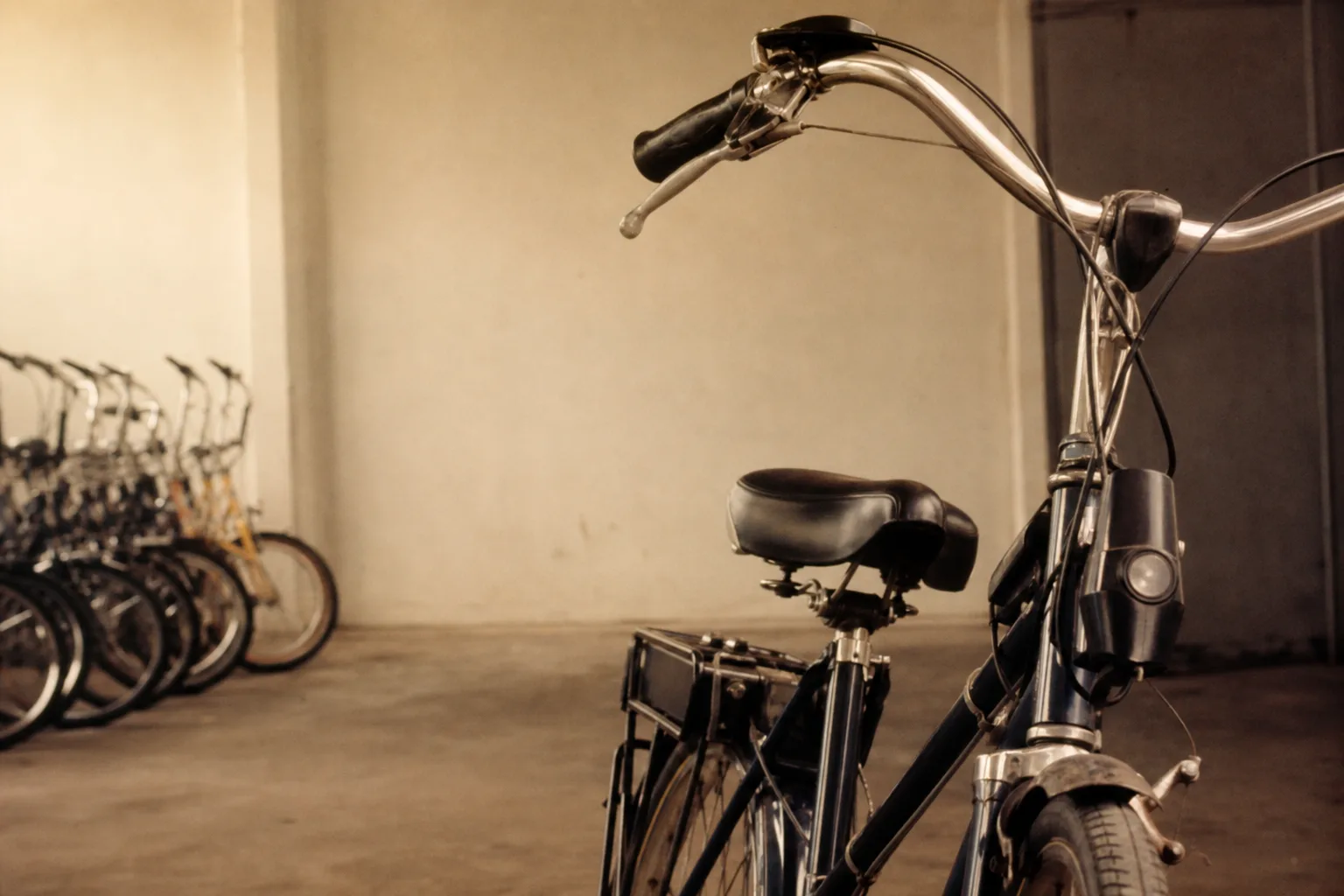
A two-mile trip is short enough that almost any bicycle will finish it, which is exactly why the choice feels harder than it should. The differences between an upright cruiser and a lean commuter do not show up in trip time so much as in what the ride demands of your hands, your back, and your patience at the far end. Geometry decides comfort. Weight decides everything that happens when the wheels stop turning. Most buyers weigh the first and discover the second later, usually on a stair landing or at a curb cut that turned out to be a curb.
What swept-back bars actually do to your body
Sitting upright puts your weight on the saddle and your spine near vertical, which means your wrists carry almost nothing and your neck stays neutral instead of craned. On flat pavement at ten or twelve miles an hour, that is close to ideal: you see traffic without turning your whole torso, you can put a foot down without dismounting, and the wide saddle spreads load across a broad contact patch rather than concentrating it. The cost arrives on any sustained grade. Climbing rewards riders who can shift weight forward and pull against the bars, and an upright position offers neither leverage nor a way to unweight the saddle.
A bridge ramp is the honest test. On a long approach grade, the same position that felt generous on flat streets pins you to the saddle, loads your sit bones under pedaling force, and gives your arms nothing useful to do. A hub motor covers much of this, which is the real argument for pairing cruiser geometry with assist rather than treating them as separate decisions. Assist converts the grade from a strength problem into a battery problem, and battery is easier to plan around than knees. That pairing is what makes electric beach cruiser bikes viable in cities with bridges rather than only in towns without them.
Hub motors and the feel of a short trip
A rear hub motor pushes the bike rather than driving the chain, so the sensation is closer to a hand at your back than to stronger legs. On short urban trips with frequent stops, that distinction matters more than peak output figures suggest. Hub systems tend to deliver assist slightly after you start pedaling, which is fine when you are rolling and less elegant when you are launching uphill from a red light with a car waiting behind you. Throttle-equipped models solve that specific moment outright. The tradeoff is drivetrain wear patterns that differ from a mid-drive, and a rear wheel that is heavier and more awkward to remove for a flat.
The Consumer Product Safety Commission oversees safety requirements for bicycles and low-speed electric bicycles sold in the United States, which is worth knowing when you compare an established brand against a marketplace listing with no identifiable importer behind it. Compliance is not a feature anyone advertises well, and it is easiest to verify by buying from a seller who will still exist in three years.
The weight you only notice off the bike
An upright electric bike with a steel or heavy aluminum frame, a hub motor, a substantial battery, wide tires, fenders, and a rack lands well above what an unassisted bike weighs, often by something like forty pounds. Riding, you will barely register it, since the motor is carrying it. Everything else is different. Lifting the front wheel onto a curb takes deliberate effort. Carrying the bike up a stoop is a two-hand, planted-feet job that some riders simply cannot do repeatedly. Getting it into a building elevator is fine; getting it up a narrow prewar stairwell with a turn in it is not, and no amount of motor helps.
This is the cost that actually determines satisfaction, and it is knowable before purchase. Walk the route from the street to wherever the bike will sleep. Count the steps, note the turns, measure the door width, and decide honestly whether you will do that twice a day in February. If the answer is no, the decision shifts to secure ground-floor storage, a removable battery you carry inside alone, or a lighter machine with less range and a smaller motor. All three are legitimate. Choosing one deliberately is what separates a bike you ride from a bike that becomes furniture.
The four questions that decide it
Where does it sleep, and what stands between the street and that spot? What is the steepest sustained climb on your regular route, and how long is it? Who fixes it, meaning is there a shop within reasonable distance that will service this motor and stock a replacement controller or a proprietary battery? And what do you carry, since a rack rated for real groceries changes the frame and rack specification you need before you buy, not after. Answer those four and the field narrows fast, usually to two or three models that differ mostly in finish.
Everything else is preference with a price tag attached. Wider tires ride better and cost range. A step-through frame is easier to mount and slightly less stiff. A bigger battery removes range anxiety and adds pounds to the exact lift you already found difficult. None of these is a mistake as long as you know which one you traded away.
The upright cruiser earns its place on short flat trips by making the bike pleasant enough that you use it instead of debating it, and the hub motor extends that comfort onto grades the geometry alone would punish you for. The weight is the invoice for both. Read it before you sign.